Builds
PokeSurvivor moves, evolutions, and held items
A PokeSurvivor partner holds up to four moves, and only the one you have selected attacks. The published move catalog lists 64 moves across all 18 types. Fifty-nine of them can evolve after they reach level 5 and you have taken the upgrade card that move asks for. The other five are buffs that never deal damage and have no evolution.
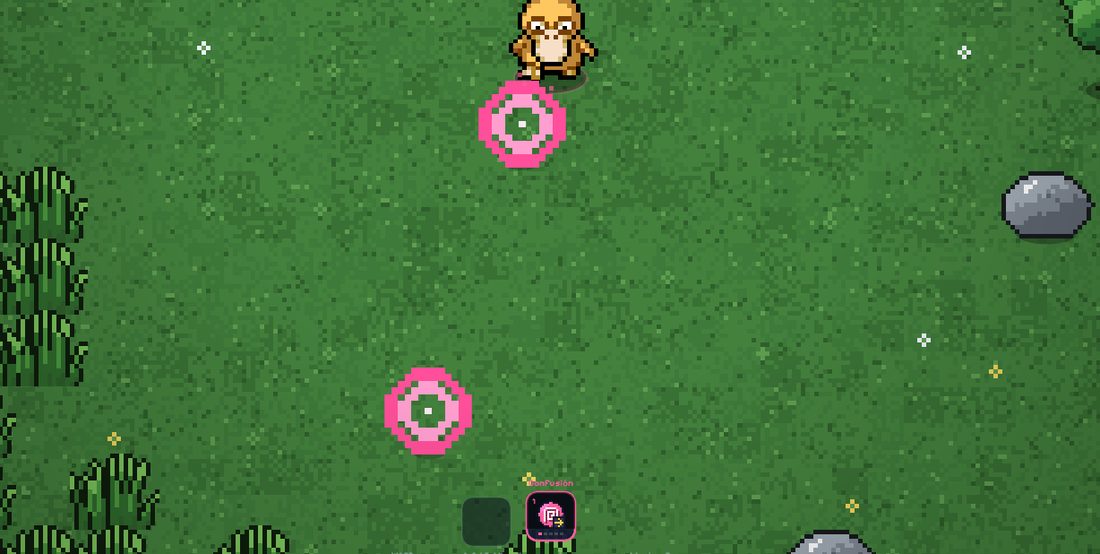
Only the selected move fires
Switching with 1 to 4, Q and E, or a click is how you change which move is live. Learning a fourth move does not make all four shoot together. The bond system is the documented exception: the game’s bond screen says bonded moves launch at the same time and take a single slot, and the repository README ties new bonds to legendary defeats, up to four moves in that fused slot. An English string in the client also says a saved bond still needs another move learned before it can be used.
On level-up the English guide offers one of three cards: a new move, an upgrade for a move you have, or a boost for the partner. Evolution is a further card. The catalog says it is golden, and that it appears once the move is at maximum level and you hold the upgrade it names. Those upgrade names, from the English catalog and the client’s translation table, are Power, Vigor, Reflexes, Sprint, Armor, Synthesis, and Magnet. Which key a move wants depends on the move. It is not “any Power-type move of the same element.”
Five catalog rows have no evolution and say they deal no damage:
- Swords Dance builds attack while it is active.
- Agility builds speed.
- Harden builds defense.
- Aqua Ring builds health regeneration.
- Dragon Dance builds attack faster than Swords Dance.
Leaving one of those selected means the partner is not damaging anything until you switch back. That is a catalog fact, not a style preference.
A sample of evolutions
The table is a sample so this page does not republish the whole catalog. Names, types, and the required card are the ones printed on the game’s move page. The “what changes” column shortens that page’s effect line. The full 64, with every multiplier, are on the game’s own move list, linked from sources.
| Move | Becomes | Needs | What the catalog says changes |
|---|---|---|---|
| Tackle | Take Down | Vigor | More damage, more range, and the swing covers a full circle. |
| Quick Attack | Extreme Speed | Sprint | More damage, a longer dash, and a shorter cooldown. |
| Ember | Fire Blast | Power | More damage, extra projectiles, extra pierce, and a larger shot. |
| Bubble | Surf | Sprint | More projectiles, more damage, and extra pierce. Bubble itself slows. |
| Water Gun | Scald | Power | More damage, extra projectiles, extra pierce, and a larger shot. |
| Vine Whip | Power Whip | Power | More damage, more range, and a full-circle hit. |
| Thunder Shock | Thunder | Power | More damage, extra projectiles, and extra pierce. |
| Ice Beam | Blizzard | Power | More damage and a wider, longer beam. |
| Confusion | Psyshock | Reflexes | More damage, extra projectiles, and extra pierce. |
| Psychic | Expanding Force | Magnet | More projectiles, more damage, and extra pierce. |
| Fire Spin | Sacred Fire | Synthesis | More orbs, more damage, and a larger radius. |
| Substitute | Double Team | Armor | More damage, one extra decoy, and faster shots. |
| Hex | Poltergeist | Magnet | More damage and extra jumps. Hex already hits harder if the target is burned, poisoned, or slowed. |
| Flash Cannon | Steel Beam | Armor | More damage and a wider, longer beam. |
The catalog groups moves by kind, not only by type: melee, dash, projectile, spray, beam, burst, orbit, aura, turret, trail, mines, meteors, boomerang, chain, and buff. A projectile such as Ember and an aura such as Discharge want different spacing. The catalog does not assign a private move list to each of the 966 partners on the public move page. The design document says a partner’s offer pool comes from its types plus a shared normal pool. That per-partner pool is not printed as a table on the English move page, so this guide does not invent who learns Ember.
Held items: one for the whole run
The game’s item page says held items come from chests and bosses, last the whole run, and that you may keep only one. Finding a second item means choosing which to keep. The item screen in the page file shows keys 1 and 2 for that choice. Effects below are the English strings shipped in the client, which match the public item page.
| Item | Effect in the English text |
|---|---|
| Leftovers | Recover 1.5% of your HP per second. |
| Choice Band | +40% damage, but you cannot switch moves. |
| Quick Claw | −20% cooldown on all your moves. |
| Focus Sash | A hit that would knock you out leaves you at 1 HP, every 60 seconds. |
| Shell Bell | You heal from the damage you deal. No percentage is printed. |
| Amulet Coin | +50% PokéCoins at the end of the run. |
| Lucky Egg | +30% experience. |
| Life Orb | +30% damage, but each attack costs a little HP. The HP cost is not given as a number. |
| Choice Scarf | +35% speed. |
| Rocky Helmet | Foes that hit you in melee take damage. The damage amount is not printed. |
| Assault Vest | +20% damage reduction. |
Choice Band fights the main defensive habit of the game, which is switching to the move that matches the creatures in front of you. It is a damage item only if one move is already the right one for the rest of the run. Life Orb is the other damage item, and it spends HP that Leftovers or Shell Bell would be trying to replace. Quick Claw and Choice Scarf do not raise the damage number; they change how often you shoot and how fast you move.
How a build actually comes together
The game’s own tips, rewritten on the tips page, favor a focused set of upgrades over taking every new attack. The catalog gives that advice a mechanical reading:
- A new move is a switch option, not a second gun, until it is bonded.
- An upgrade on a move you already use is what pushes it to level 5, which is the level the catalog requires before the golden card can appear.
- The named card (Power, Sprint, and the rest) has to be taken in that same run. Maximum level alone is not the evolution.
- Permanent ranks such as Repertoire, Card reroll, and Ban, listed on the partners page, change the starting hand and the card pool. They are bought with coins between runs. They are not the same objects as the seven evolution keys.
Type matchups change which selected move is worth firing. The softened chart, super effective at ×1.6 and immunities reduced to ×0.3, is explained with weather on the runs page. Ground markers, healers, and shielders are covered with the movement tips, because they are threats rather than weapons.
Base damage, cooldown, and projectile counts for all 64 moves are not reprinted here. The public move page describes many of them in words (“a piercing jet,” “a slow but devastating water blast”) and gives numeric multipliers mainly on the evolution. Where this page does not state a number, the catalog did not give one in a form this guide is repeating.